AI data analyst platform

Intelligence that moves your data work forward.

Glaukes helps teams query operational data in plain English, understand what changed, and turn answers into action without living in SQL or rigid BI dashboards.

Platform

Glaukes powers AI-driven analytics for modern teams.We connect conversations, live data, semantic context,and recurring delivery into one operating layer.

01 Conversations

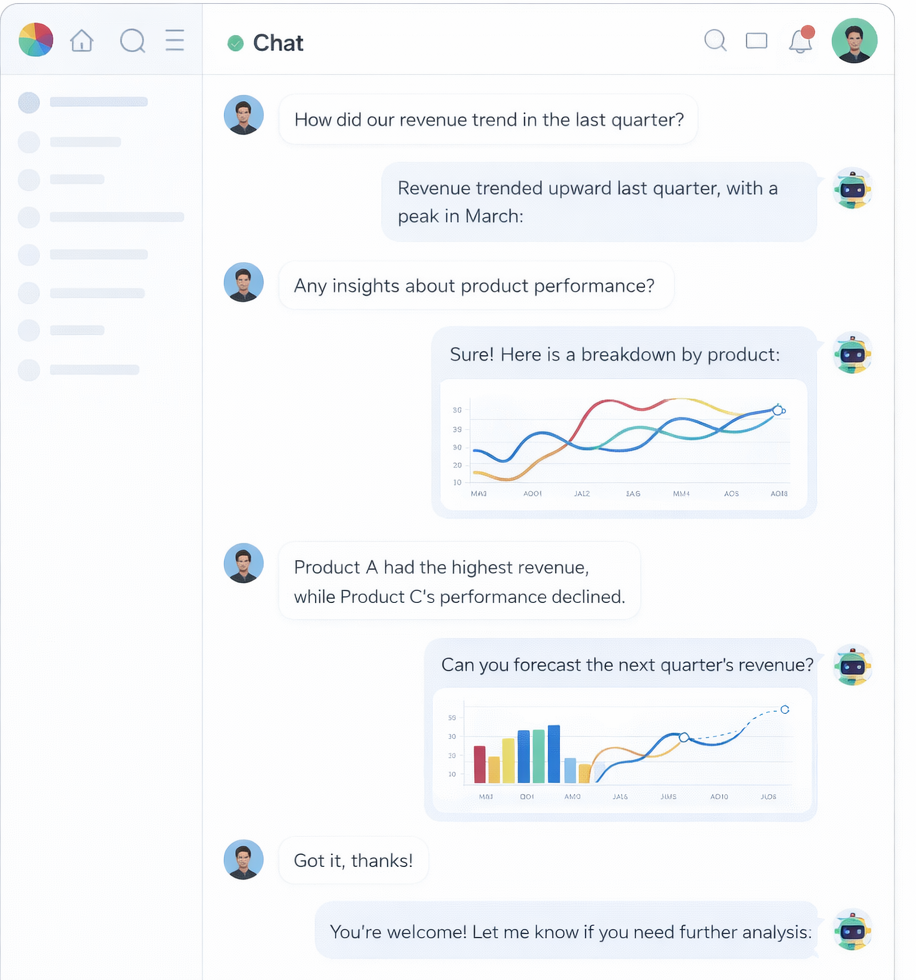
A conversation surface that works like an analyst, not a chatbot.

Atlas handles multi-turn questions, selects the right tool for the job, and returns answers as text, tables, charts, dashboards, or reports from one thread.

Multi-turn context with memory and follow-up refinement
Output formats that move from chat to chart to dashboard to PDF report
Inline tool controls and data source selection per conversation
01 Conversations

02 Data Sources

Live data connections, not exported screenshots and stale CSVs.

Glaukes connects directly to the systems where the business already runs, introspects schema automatically, and keeps query execution server-side for tighter control.

Postgres, BigQuery, Snowflake, Redshift, MySQL, SQL Server, Supabase
Automatic table, column, and relationship discovery
Encrypted credentials and read-only execution patterns
02 Data Sources

03 Data Map

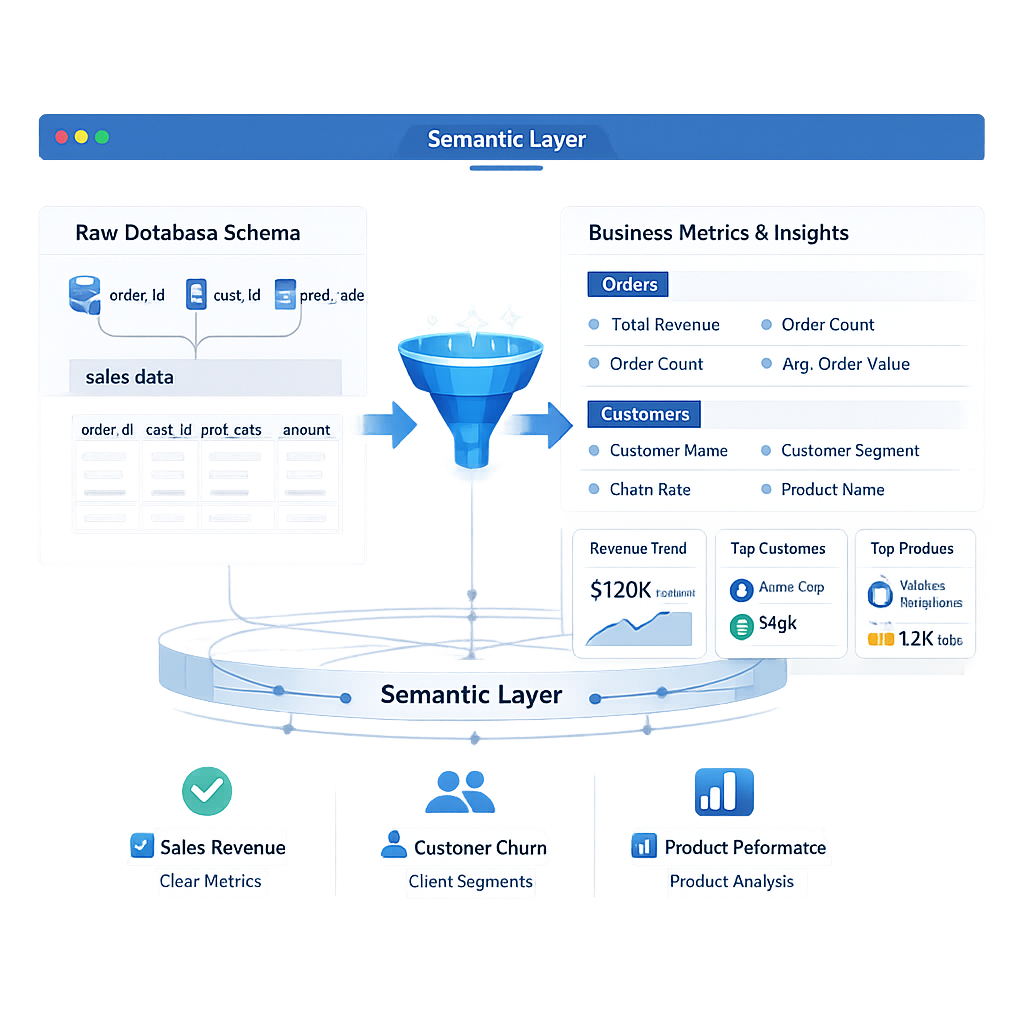
A semantic layer that makes business questions deterministic.

The Data Map translates raw schema into business entities, metrics, and relationships so Atlas stops guessing and starts answering with consistency.

Entity, attribute, metric, and relation modeling
Business-friendly names instead of raw warehouse column names
Prompt injection of semantic context for reliable query generation
03 Data Map

04 Automations

Turn one useful answer into a recurring operational workflow.

Save prompts as scheduled automations, deliver outputs on a cadence, and pin results into dashboards so insights become part of daily operations.

Scheduled analyses with execution history
Recurring reports for email, Slack, or internal review flows
Dashboard widgets built directly from conversation outputs
04 Automations

Capabilities

Built for governed analytics work
across teams, systems, and delivery formats.

Conversations

Ask operational questions naturally

From approvals to merchant performance, teams can investigate live data without waiting on SQL support.

Data Sources

Connect the warehouse and the systems behind it

Bring together data sources like Postgres, Snowflake, BigQuery, and internal event streams in one workspace.

Data Map

Preserve one source of business truth

Shared definitions for KPIs and entities make answers consistent across finance, risk, and operations.

Automations

Turn answers into reusable workflows

Save investigations, recurring reports, and team views once the right question has been answered.

Analytics

Dashboards that reflect the real question

Build live views from conversation output — charts, tables, and summaries that update as the data does.

Governance

Built for governed environments

Approvals, visibility rules, and auditability keep the experience usable in real financial operations.

Solutions

Built for teams that run on data.

01

Fintech & Payments

Reconcile settlements, monitor chargebacks, and track transaction volumes in natural language — no SQL backlog required.

Net settlement value last weekChargeback rate by merchant typeFee spikes by payment corridor
02

Healthcare & Life Sciences

Query patient intake timelines, billing cycles, and operational throughput with governed, role-aware access.

Average intake time last quarterClaim denial rate by insurerLab turnaround vs SLA
03

Retail & eCommerce

Track GMV, conversion funnels, and inventory health across channels without building a new dashboard for every request.

Weekly GMV vs prior periodCart abandonment by deviceSKU stockout risk this weekend
04

Logistics & Supply Chain

Investigate delivery performance, carrier cost variance, and route efficiency directly from the data in your warehouse.

On-time delivery rate by carrierCost per shipment trendDelay hotspots by region
05

Media & Publishing

Understand audience behavior, content performance, and subscriber churn through recurring automations that keep the whole team current.

Top content by completion rateSubscriber churn this monthRevenue by content category

FAQ

Common questions, straight answers.

No. Glaukes never stores the data inside your databases. It connects live, executes read-only queries server-side, and returns results to your session. Only schema metadata (table names, column names, types) is cached to speed up query generation — never row-level data.

Atlas uses your schema metadata and, optionally, your Data Map (a semantic model you define) to construct accurate SQL. Credentials are encrypted and never sent to the LLM — only the structural context needed to produce the query is passed.

Glaukes supports PostgreSQL, MySQL, BigQuery, Snowflake, Redshift, SQL Server, SQLite, Supabase, and Clickhouse out of the box. CSV and Excel file uploads are also supported as temporary in-session data sources.

The Data Map is an optional semantic layer that maps raw table and column names to business-friendly concepts — entities, metrics, and relationships. Without it, Atlas still works well. With it, answers become more consistent and reliable because Atlas stops guessing terminology.

Yes. Automations let you save any conversation prompt as a scheduled analysis — daily, weekly, or on a custom cadence — and deliver the output to email, Slack, or a dashboard. No engineering work required.

Each workspace has role-based knowledge and data source scoping. You control which team members can see which data sources and which background context Atlas uses when answering. All queries are logged for audit review.

Glaukes routes through LiteLLM, giving you access to Groq, Google Gemini, DeepSeek, and local Ollama models. You can set a default model per workspace or switch models at the conversation level.

The platform is designed to run on your own infrastructure. The backend is a FastAPI service and the frontend is a Next.js application — both can be deployed to your own cloud environment with your own database credentials and LLM API keys.

Turn your data into answers. Starting today.

Connect your warehouse, ask your first question, and get a real answer — without writing a single line of SQL.